


Inventory Managenment
Optimize your business operations with effective inventory management.
Inventory Management The Backbone of Effective Business Operations
In moment’s presto- paced request, businesses can no longer go detainments, stockouts, or overstocking. This is where force operation plays a critical part. Whether you run an eCommerce store, a storehouse, or a logistics company, managing your force efficiently can directly impact your profitability and client satisfaction.
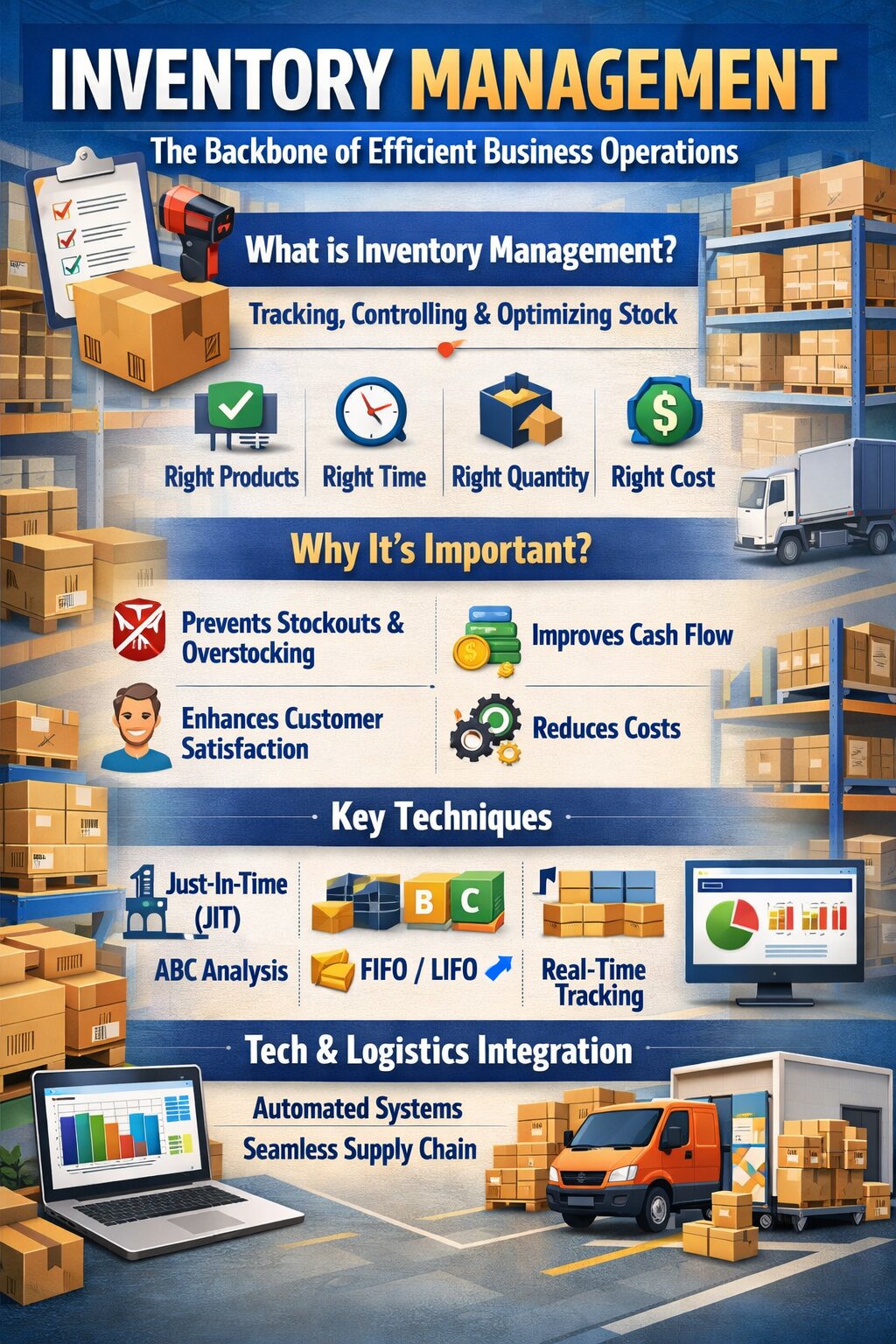
What's Inventory Management?
force operation is the process of shadowing, controlling, and optimizing the storehouse and inflow of goods — from raw accoutrements to finished products.
It ensures
Right products are available
At the right time
In the right volume
At the right cost
Why Inventory Management is Important
1. Prevents Stockouts & Overstocking
Running out of stock leads to lost deals, while redundant stock increases holding costs. A proper system balances both.
2. Improves Cash Flow
force ties up capital. Effective operation ensures your plutocrat is n’t stuck in unsold goods.
3. Enhances client Satisfaction
Faster order fulfillment and product vacuity lead to better client gests .
4. Reduces functional Costs
Minimizes storehouse, destruction, and gratuitous running charges.
Key Features of Inventory Management Systems
✔️ Real- Time Tracking
Examiner stock situations across storages incontinently.
✔️ Automated Stock Updates
force gets streamlined automatically after every trade or return.
✔️ Demand soothsaying
prognosticate unborn demand grounded on once deals trends.
✔️ Order Management Integration
Sync with logistics systems for smooth dispatch and delivery.
✔️Multi-Warehouse Support
Manage force across multiple locales from a single dashboard.
Types of Inventory Management ways
1. Just- In- Time( JIT)Stock is ordered only when demanded, reducing storehouse costs.
2. ABC Analysis
Categorizes force grounded on value and significance
A High value
B Moderate value
C Low value
3. FIFO( First In, First Out)
Old force is vended first — ideal for perishable goods.
4. LIFO( Last In, First Out)
lately added force is vended first.
Challenges in Inventory Management
Homemade crimes in tracking
Lack of real- time visibility
Demand oscillations
Poor collaboration between storehouse & logistics
High return rates( especially in eCommerce)
part of Technology in Inventory Management
ultramodern businesses are shifting towards digital force systems that integrate with logistics platforms.
Benefits include
Automated workflows
Reduced mortal error
Faster order processing
Data- driven decision making
Integration with logistics platforms( like smart shipping dashboards) helps businesses manage both force and deliveries in one place.
Stylish Practices for Effective Inventory Management
Regular stock checkups
Use force operation software
Set reorder points
dissect deals trends
Optimize storehouse layout
Integrate with logistics systems
Inventory Management in Logistics
In logistics, force operation ensures
Faster dispatch
Reduced detainments
Effective storehouse operations
More shadowing of shipments
A well- integrated system connects force, warehousing, and delivery, creating a flawless force chain.
Conclusion
force operation is n't just about tracking stock — it’s about optimizing your entire business operation. With the right tools and strategies, businesses can reduce costs, ameliorate effectiveness, and deliver a better client experience.
Share:



0 Comments
Leave a reply